
Top 10 Tools Every Data Analyst Should Learn
Why These 10 Tools Matter for Every Data Analyst
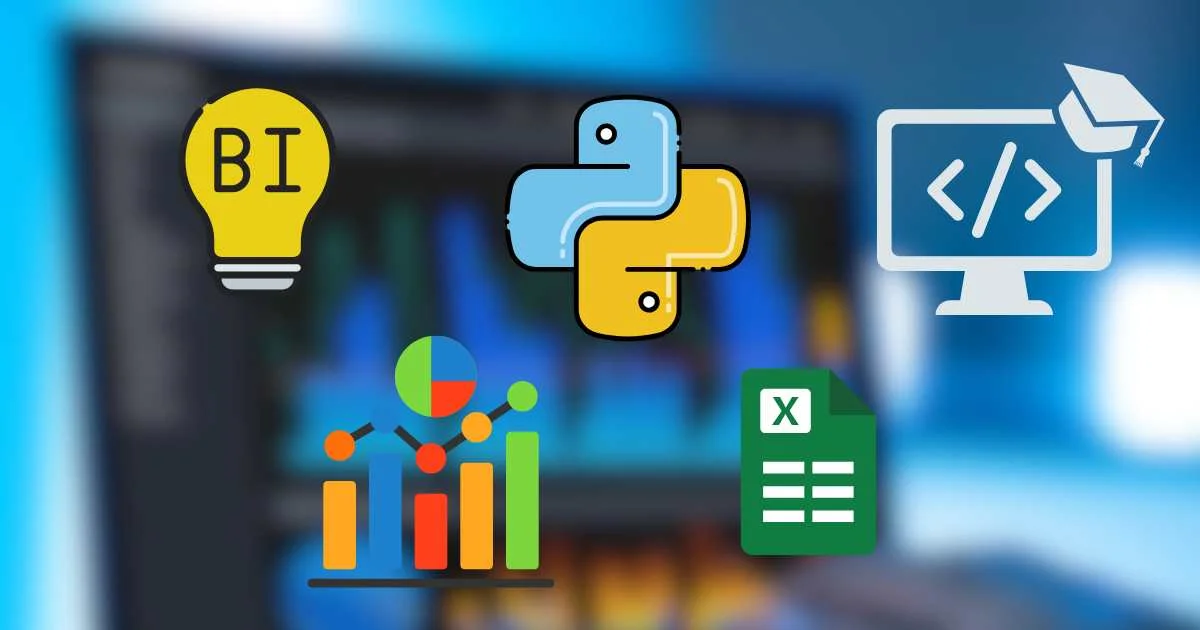
These are the main tools that analytics teams actually use, and hiring managers are looking for. They cover the entire data analytics workflow, including collecting, querying data, cleaning, processing, visualizing insights, and handling large-scale datasets.
Top 10 Tools Every Data Analyst Should Learn in 2025
1. SQL (Structured Query Language)
SQL is the foundational skill for data analysts. It enables you to edit, extract, and manipulate data from databases. SQL is often used to access or assemble the data you need to analyze. It is a skill that every analytics role demands, and it frequently appears in job listings for entry-level analytical positions.
2. Microsoft Excel
Microsoft Excel is one of the most widely used tools in data analytics. Many business teams still choose Excel for quick and effective data analysis due to its accessibility and familiarity. Excel offers PivotTable, VLOOKUP, quick visualizations, statistical analysis, and even basic programming features.
3. Python
Python ranks as the first programming language for data analytics due to its versatility. Its vast ecosystem of libraries, such as Pandas, NumPy, Matplotlib, and scikit-learn, enables everything from data cleaning and visualization to statistical modeling and machine learning.
4. R Programming
R is a specialized language for data manipulation, processing, visualization, statistical computing, and machine learning. Among researchers, academics, and financial analysts, R's ecosystem has powerful analytical capabilities for complex statistical modeling, hypothesis testing, and predictive analytics.
5. Power BI
Power BI is one of the most popular business intelligence tools developed by Microsoft for transforming raw data into interactive dashboards and reports. Its integration with Excel, SQL Server, and cloud services makes it especially valuable for enterprise analytics and executive reporting.
6. Tableau
Tableau is a leading data visualization tool known for turning complex data into easy-to-understand visuals. Its drag-and-drop interface makes it accessible even to non-technical professionals, while its advanced capabilities support big data analytics and predictive insights.
7. SAS (Statistical Analysis System)
SAS is a powerful statistical software suite widely used in industries like finance, healthcare, and government for data management, predictive analytics, and advanced statistical analysis.
8. Apache Spark
Apache Spark is an open-source big data processing framework that allows large-scale data analysis across multiple nodes. Organizations use Spark for real-time data processing, machine learning, and large-scale ETL operations.
9. Google BigQuery
Google BigQuery is a fully managed, cloud-based data warehouse that enables super-fast SQL queries over large datasets. It's ideal for businesses that generate large volumes of data and need quick insights without investing in server maintenance.
10. Julia
Julia is a high-performance programming language designed for numerical and scientific computing. It combines the simplicity of Python with the speed of C, making it perfect for large-scale data processing, simulation, and machine learning applications.
What Employers Will Look for in Data Analysts in 2025
- End-to-end workflow capability — from data ingestion, cleaning, modelling/analysis, to visualisation and reporting.
- Ability to communicate insights and turn dashboards or scripts into business recommendations.
- Skills in scripting (Python/R), big data tools (Spark/BigQuery) as data volumes grow.
- Real project experience — more convincing than a certificate alone.
- Cross-tool competence — an analyst comfortable with SQL + Excel + Python + Power BI stands out.
- Continuous learning and adaptability in a fast-changing landscape.
Related Articles
 Data Analytics
Many beginners want to become Data Analysts but don't know where to start, what skills to learn, or how to follow a proper sequence. Some jump into Python too early, some get stuck in Excel, and others learn too many tools without building real projects.
 Data Analytics
You can start learning Data Analytics for free and build fundamental, job-ready skills without spending a single rupee. Today, dozens of platforms offer hands-on tutorials, community datasets, and open tools that teach you how to collect, clean, and analyze data like a pro.
 Data Analytics
If you're exploring a career in data analytics, one of the most important questions you'll face is: What should I pay for a quality course in Kerala, and is it worth the cost? With many institutes offering varying fees, durations, and promises, understanding the actual value is critical.